Jinko Solar panels are some of the most trusted solar brands out there. However, before you consider buying one, you should be extremely careful. Fake copies flood the Kenyan market. You could lose money. Worse, fake panels fail fast or even risk fires. You must know how to spot real Jinko. Check labels. Verify serial numbers. Demand paperwork. Never skip these steps. So that you don’t end up being conned or sold dangerous imitations. Protect your investment.
Here’s step-by-step procedure on how to check Jinko solar panel:
Step-by-Step: How to Verify Jinko Solar Panels
Step 1: Look Closely at the Panel
- Find the Jinko Logo: Real panels have the "Jinko Solar" name printed clearly on the glass or frame. Look hard. Is the printing sharp? Are letters neat and straight? Fake panels often have blurry logos or cheap stickers. Try scratching it – real logos don’t peel off.
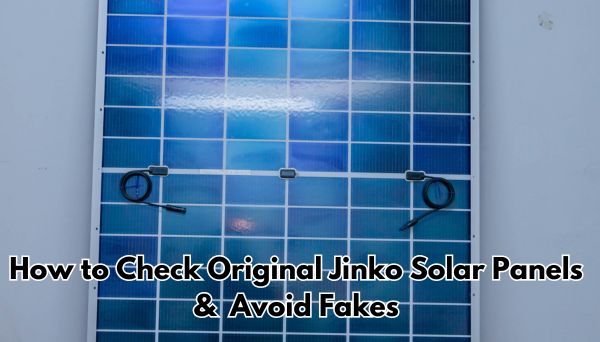
- Spot the Serial Number: Every real panel has a unique number. Find the label stuck on the back. Touch it. Is the label strong? Is the printing dark and clear? Fake labels feel thin, look faded, or lift off too easily.
- Check Model & Power: See the panel’s exact name (like "Tiger Neo 78TR") and wattage (e.g., "585W") near the serial number. Does it match what the seller promised? If you paid for 585W but the label says 550W? Big warning sign.
- Feel the Quality: Hold the panel. Real frames feel heavy and solid. Look at the metal corners – are they smooth and welded tight? Is the glass clean with no bubbles or deep scratches? If the frame bends easily or glass feels thin? Walk away.
Step 2: Demand the Right Papers
- Get a Detailed Invoice: Make the seller give you a proper receipt. This invoice MUST show:
- Your full name and phone number.
- The seller’s shop name, address, and Kenyan phone.
- The exact Jinko model names you bought.
- The exact quantity.
- The unique serial number for every single panel.
- The date you paid.
- Get the Real Warranty Card: Genuine Jinko panels come with a warranty card or paper. Check it! Does the serial number on your panel match the number on the warranty? Does it clearly say " "25 years warranty"? If not, ask why.
Step 3: Check the Serial Number Online
This step is crucial. Do it yourself:
- Write Down the Number: Copy the serial number carefully from the back label of one panel.
- Go Straight to Jinko’s REAL Website: Open your phone or computer. Type www.jinkosolar.com yourself. Don’t Google it – type the address.
- Find the Checker Page: Look for "Support" or "Service" on their site. Inside that, find "Product Traceability," "Warranty Check," or "Verify Serial Number." Can’t find it? Look for "Contact Us" and ask Jinko where to check.
- Type Your Number: Put your panel’s serial number into Jinko’s online checker. Type it exactly right.
- See the Truth: The website will tell you instantly if your panel is real. If genuine, it shows:
- The correct model name (Does it match your label?).
- The true wattage (Does it match?).
- When the panel was made.
- That the warranty is active.
If the website says "Invalid Number" or shows the wrong model/wattage? You likely have fakes. Stop everything. Demand answers from your seller.
Step 4: Get Extra Help
- Ask Your Installer: A good Kenyan solar technician knows real panels. Show them. Ask, "Do these look right to you?" They see fakes often and might spot flaws you missed.
- Watch the Power: After installation, check your solar monitor. Is one group of panels making much less power than expected on sunny days? Real panels vary a little, but big, consistent shortfalls could mean fake panels. Compare to what the panel’s label promised.
- Look for KEBS Mark: Genuine panels sold officially in Kenya often have a KEBS (Kenya Bureau of Standards) mark. It’s a small stamp. It’s not the main proof (use Step 3!), but seeing it is a good extra sign. No KEBS mark? Doesn’t always mean fake, but ask why it’s missing.
Step 5: Buy Wisely
Start smart to avoid panic later:
- Buy ONLY from Proven Dealers: Buy only from proven solar products dealers like Salphak Ventures.
- Ignore Crazy Low Prices: Real Jinko panels cost a fair price. If someone offers panels way cheaper than everyone else? It’s probably fake. Remember: Cheap panels break fast. You pay twice.
- Get Promises in Writing: Before paying, make the seller write down the exact model names, quantities, wattages, and guarantee that the serial numbers will verify on Jinko’s site. Sign it.
Why Fight Fakes? The Real Cost:
Fake Jinko panels steal your money:
- They Die Young: Real panels last 25+ years. Fakes crack or fade in just a few Kenyan summers.
- They Make Less Power: You paid for 585W? Fakes might give you only 400W. Your lights dim. Your fridge struggles.
- They Can Be Dangerous: Bad materials cause fires or shocks. Protect your family.
- No Help When They Fail: Jinko won’t fix fakes. Your warranty paper is trash. You lose everything.
- Headache Guaranteed: Constant repairs. Arguments with the seller. Lost power. Avoid this stress.
Your Final Check:
Before you relax, do these three things:
- Look: Check the panels yourself (Step 1).
- Get Papers: Make sure you have the invoice and warranty with your panels’ serial numbers (Step 2).
- Verify Online: Check at least one panel’s serial number on Jinko’s real website yourself (Step 3). Do not skip this.
Check Out Salphal Ventures in Nairobi For Original Jinko Solar Panels
Only buy from approved sellers. Only purchase from approved and professional Solar companies like Salphak Ventures, an approved solar company that deals with only genuine solar products. Check out our Jinko solar panels, starting at only Ksh 11,600
Frequently Asked Questions
How can I check if my Jinko solar panel is original?
Visit the official Jinko Solar website at jinkosolar.com and use the serial number verification tool. The serial number is printed on the back label of every genuine Jinko panel.
Where is the serial number on a Jinko solar panel?
The serial number on a Jinko solar panel is located on the white label on the back of the panel. It typically starts with letters followed by numbers.
How do I know if my Jinko solar panel is fake?
Signs of a counterfeit Jinko panel include: missing or smudged serial number label, serial number that fails verification on the Jinko website, poor cell alignment, and unusually low price.